 EN EN
EN EN Why Choose Non-Clumping Cat Litter for Wholesale?
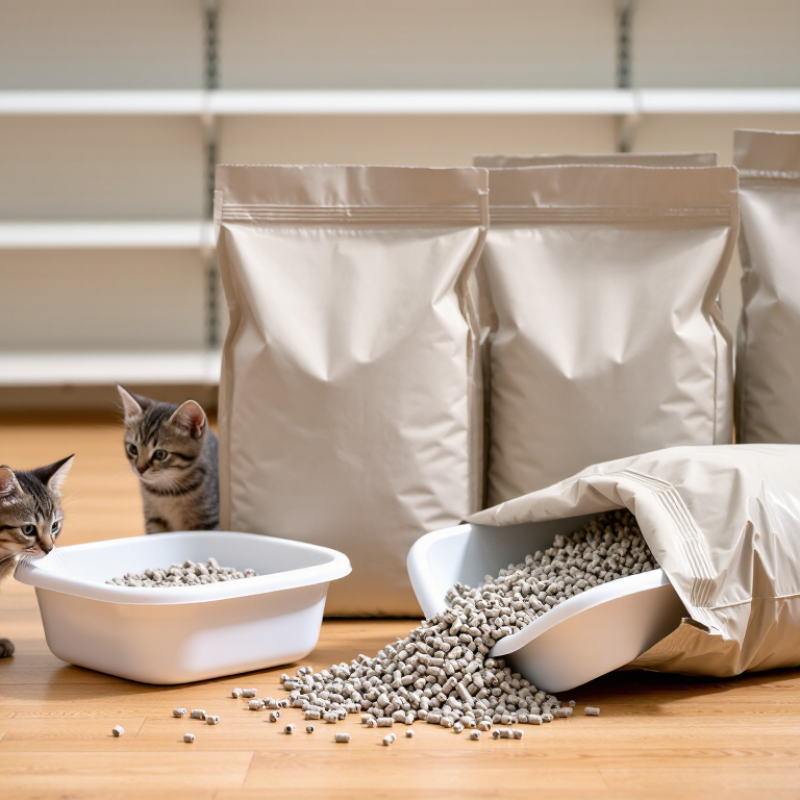
Wholesale buyers face a practical question: will this litter perform reliably across homes, shelters, and retail shelves? Non-Clumping Cat Litter offers a straightforward option for customers who prefer simple daily maintenance. Instead of forming hard masses, it absorbs moisture through individual particles. Used litter can be removed with a scoop, while the remaining material stays loose. The texture is visible. The routine is easy to explain.
Veterinarian Dr. Jean Hofve has often emphasized, “The best litter is the one your cat will use consistently.” That principle matters in wholesale purchasing. A product may look attractive in bulk packaging, yet poor acceptance can create returns and disappointed customers. Non-Clumping Cat Litter can suit kittens, multi-cat households, and owners seeking a familiar, low-complexity format. However, it is not automatically the right choice for every cat. Odor control, dust levels, particle size, and material quality still require careful evaluation.
For distributors, consistency is essential. Bags should arrive dry, sealed, and uniform in weight. Retail partners also need clear instructions for cleaning and replacement. A dependable product reduces confusion at the shelf and during home use. Still, one weakness deserves attention: non-clumping formats may require more frequent full changes. That can increase consumption in busy households. Wholesale success depends on honest positioning, not exaggerated promises. Compare absorbency, packaging strength, customer feedback, and storage performance before committing to large volumes. A modest trial order may reveal more than a polished sales presentation.
Why Choose Non-Clumping Cat Litter for Wholesale?
What Is Non-Clumping Cat Litter and How Does It Work?
Non-clumping cat litter is an absorbent bedding material. It may contain clay, wood, paper, or plant fibers. Unlike clumping litter, it does not bind when wet. Instead, urine spreads through the granules and becomes absorbed. Solid waste remains on the surface for easy removal. The process is simple, but odor control depends heavily on the material and replacement schedule.
The American Pet Products Association’s 2023–2024 National Pet Owners Survey counted 46.5 million U.S. cat-owning households. FEDIAF’s 2024 European Facts and Figures report recorded about 108.3 million cats in Europe during 2023. These reports do not measure litter sales. However, they show a broad and steady customer base for wholesale buyers. Retailers should compare absorbency, dust levels, particle size, packaging strength, and storage stability before ordering large volumes.
In daily use, owners remove solid waste and stir clean granules to improve airflow. Wet areas eventually spread throughout the tray. Full replacement is therefore necessary. It can be less convenient than removing compact clumps. Still, some households prefer its familiar texture and straightforward handling. It is not perfect. A practical wholesale test should include odor after several days, leakage under pressure, and dust around the tray. Small details often decide repeat purchases.
| Evaluation Dimension | Non-Clumping Cat Litter | How It Works | Wholesale Relevance |
|---|---|---|---|
| Definition | Cat litter that absorbs liquid without forming solid clumps. | Urine spreads through the litter and is absorbed or retained by the material. | Offers a straightforward product format suitable for value-focused and high-volume channels. |
| Common Materials | Crushed clay, recycled paper, wood fiber or pellets, silica crystals, and plant-based fibers. | Each material uses a different combination of absorption, wicking, evaporation, or moisture retention. | Multiple material options support different price points, packaging formats, and customer preferences. |
| Liquid Management | Absorbs liquid throughout the litter bed rather than isolating it in a scoopable clump. | Moisture is held inside particles, fibers, pellets, or absorbent crystals. | Clear usage instructions and suitable litter depth are important for consistent retail performance. |
| Solid Waste Removal | Solid waste is removed with a scoop, while saturated or heavily soiled litter is replaced periodically. | A slotted scoop can separate feces from relatively clean litter, but urine-soaked particles are not removed as a single mass. | Simple maintenance guidance can reduce misuse, complaints, and premature product replacement. |
| Odor Control | Provides odor control through absorption, ventilation, mineral properties, activated carbon, or added fragrance, depending on formulation. | Reducing exposed moisture helps limit odor, but regular solid-waste removal and full litter changes remain necessary. | Odor-control claims should match the actual formulation and should not imply unlimited odor prevention. |
| Dust Profile | Dust levels vary by raw material, particle size, screening, and handling. Pellets and larger particles often produce less airborne dust than fine powders. | Manufacturing processes such as screening and dust removal can reduce loose fine particles. | Low-dust positioning may improve product acceptance, especially in indoor-use and multi-cat households. |
| Tracking Potential | Depends mainly on particle size, shape, surface texture, and the cat’s behavior. | Larger, heavier particles and pellets generally reduce the amount carried away on paws compared with very fine particles. | Particle-size options allow wholesalers to target different retail segments and household preferences. |
| Replacement Method | Usually requires regular stirring, topping up, and complete replacement when the litter bed becomes saturated or develops persistent odor. | The entire litter bed is managed as an absorbent layer rather than as individually removable urine clumps. | Retail packaging should state replacement frequency clearly because it varies with litter type, tray size, and number of cats. |
| Typical Cost Position | Often available in economical formulations, although premium crystal, paper, wood, and plant-based products may cost more. | Material sourcing, processing, absorbency, packaging weight, and transport requirements determine the final cost. | Supports a broad wholesale assortment from entry-level products to specialized natural or low-dust options. |
| Storage and Transport | Dry storage is essential because absorbent litter can take up moisture before use. | Moisture-resistant packaging helps preserve texture, absorbency, and product weight during storage and shipment. | Stable packaging, pallet efficiency, and protection from humidity are important for inventory control. |
| Environmental Considerations | Environmental impact varies widely: mineral litter is extracted from natural deposits, while paper, wood, and plant-based options may use renewable or recycled feedstocks. | Material origin, processing energy, packaging, transport distance, and disposal method all affect sustainability. | Sustainability claims should be specific, verifiable, and consistent with local waste-disposal rules. |
| Disposal Guidance | Used litter should generally be placed in household waste unless local regulations and the product instructions specifically allow another method. | Disposal depends on the material and local wastewater or municipal-waste requirements. | Clear disposal instructions help reduce incorrect flushing and support regulatory compliance across markets. |
| Best Suitable Users | Households seeking simple, economical litter management or cats that do not prefer clumping textures. | The cat interacts with an absorbent surface without encountering firm urine clumps. | Useful for serving budget-conscious consumers, multi-cat households, shelters, breeders, and high-volume purchasers. |
It is absorbent bedding made from materials such as clay, wood, paper, or plant fibers. It does not form hard clumps when wet. Urine spreads through the granules and becomes absorbed. Solid waste stays on the surface. Simple, but not flawless.
Owners remove solid waste and stir the remaining granules. This can improve airflow and distribute moisture. Wet areas gradually spread across the tray. Full replacement is eventually necessary.
Many owners prefer its familiar texture and straightforward handling. It can suit apartments, shelters, and homes with several cats. Smaller bags may also be easier to carry and store. Convenience varies by household.
Non-clumping formulas can offer predictable handling and simple packaging. Buyers can compare mineral, paper, wood, and plant-based materials. Lower material costs may support value-focused product ranges. A low unit price can still mislead buyers.
Odor control depends on absorbency, material quality, airflow, and replacement timing. Remove solid waste daily and monitor wet areas closely. Test the tray after several days. Fresh at first.
Usually, yes. Moisture spreads instead of forming removable clumps. The entire tray may need replacement sooner. This can increase monthly usage and reduce the apparent cost advantage.
Request samples before placing volume orders. Test absorption, odor after several days, dust, particle size, and leakage under pressure. Check whether bags remain dry during storage. Small details matter.
Measure monthly usage in real homes, not only the price per bag. Record bag weight, replacement frequency, transport efficiency, and storage losses. A clean-looking package means little if liquid spreads quickly. Recheck the numbers.
Non-Clumping Cat Litter is designed to absorb moisture without forming solid clumps, making it a practical option for wholesale buyers seeking simple, cost-effective, and versatile pet care products. Common materials may include wood, paper, silica, or mineral-based ingredients, each offering different levels of absorbency, odor control, dust performance, and environmental suitability. Understanding these differences helps wholesalers select products that match the needs of retailers and pet owners.
When evaluating suppliers, wholesalers should consider material quality, consistency, packaging strength, storage requirements, transport efficiency, and product safety information. Well-designed packaging can reduce moisture exposure, prevent damage, and support convenient distribution. A reliable supplier should provide stable production capacity, clear specifications, responsive communication, and dependable delivery arrangements. By comparing product performance, packaging, pricing, and supply capabilities, wholesale buyers can build a more competitive product range and support long-term customer satisfaction.