Choosing among China’s best high-performance cat litter suppliers requires more than comparing quoted prices. Buyers need evidence of consistent absorbency, odor control, low dust, reliable clumping, and stable batch quality. Small differences matter: a dusty pour can cloud a room, while weak clumps may break during scooping. Details count.
Industry data offers useful context, but it should be read carefully. The American Pet Products Association’s 2025 State of the Industry report estimated U.S. pet-industry spending at $152 billion in 2024. That figure covers the wider pet sector, not cat litter alone. Grand View Research’s Cat Litter Market Size, Share & Trends Analysis provides category-specific market analysis and forecasts. Together, these sources indicate a substantial, closely watched market; they do not certify any individual factory or product. Buyers should verify supplier claims through recent test reports, material specifications, and production records. Request samples, then compare dust, clumping, odor performance, and package integrity under the same conditions. Ask how the supplier manages raw-material changes and quality checks between batches. A polished brochure is not proof. And one sample is not enough. This guide examines practical supplier-selection factors for High-Performance Cat Litter from China, while recognizing that “best” depends on product requirements, target markets, and evidence a buyer can independently confirm.
High-performance cat litter is more than litter that forms a firm clump. It should absorb urine quickly, limit lingering odor, produce little airborne dust, and stay mostly inside the tray. These qualities can be checked in repeatable trials: weigh dry and saturated samples, inspect clump breakage, and record visible dust and tracked granules. A single “best” score can mislead. Household humidity and cleaning habits change the result.
The 2025 APPA National Pet Owners Survey estimates that 49 million U.S. households own cats, showing how many homes rely on litter every day. Veterinary guidance from the AAFP and ISFM favors fine-grained, unscented clumping litter for many cats. That preference matters: a strong perfume may hide odor for people but can make a tray unpleasant for a sensitive cat. Quietly important.
For buyers, compare performance per kilogram, not just the bag price. Check whether clumps lift cleanly from the tray, whether wet litter breaks apart, and whether dust settles on nearby surfaces. Also note paw tracking around the box. No product performs identically in every home, and published testing methods are not always comparable. That is a limitation worth admitting. A supplier making credible claims should disclose test conditions, sample size, and how odor or dust was measured.
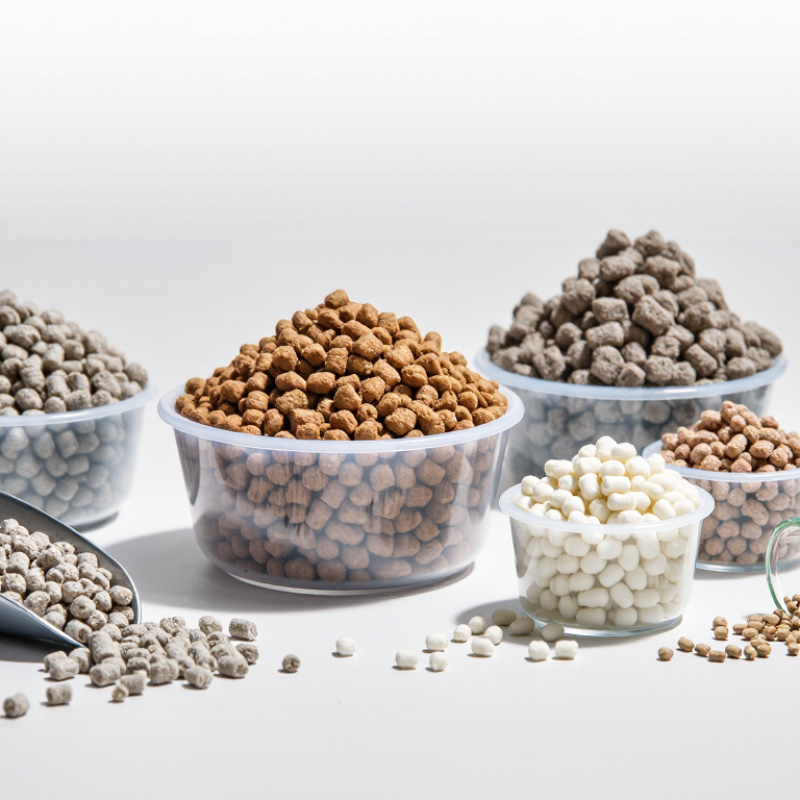
Cat litter performance depends on more than absorbency. Bentonite clay forms firm clumps, making daily scooping straightforward and helping keep wet litter in one area. Its weight can make bags awkward to carry, and fine particles may create dust during pouring. The trade-off is real. Non-clumping clay absorbs moisture but usually needs more frequent full-pan changes, especially in busy multi-cat homes.
Silica gel crystals are lightweight and can hold moisture between changes, though some cats dislike their texture underfoot. Plant-based litters made from wood, paper, corn, or other fibers vary widely: pellets may track less, while softer granules can feel more familiar. Clumping strength and odor control depend on the specific material and how often waste is removed. Dust still matters. I find material comparisons a little imperfect, since room humidity, litter depth, and a cat’s habits can change results. A simple home trial—watching for paw tracking, damp patches, and willingness to use the box—often reveals more than a label alone. Don’t switch every variable at once; it makes the result harder to read.
This chart compares typical material characteristics on an indicative 1–5 scale, where 5 represents stronger performance. Ratings are qualitative comparisons, not standardized laboratory measurements; results vary by product formulation and use. Bentonite clay generally forms firm clumps, while silica gel is highly absorbent but does not clump. Paper and wood litters are plant- or fiber-based options, and tofu litter commonly forms clumps.
China’s cat litter supplier landscape spans manufacturers focused on mineral, plant-based, and other absorbent materials. Many suppliers offer private-label production, but their strengths differ in particle consistency, dust control, clumping speed, and odor management. A clean factory floor is useful, yet it does not prove stable output. Buyers should ask how incoming materials are checked and whether finished batches receive repeatable tests. Request recent results for moisture, fines, absorption, and clump strength. Then inspect a sealed sample yourself. Small checks matter.
For high-performance products, compare more than a brochure’s claims. Test litter with the same tray depth and liquid volume used at home, and note tracking around the mat after several days. Check whether packaging resists punctures during stacking and shipping. Ask the supplier to explain production capacity, lead times, and how it handles out-of-spec batches. A sample may feel excellent, while a later shipment behaves differently; this gap deserves attention, not optimism. Communication can be imperfect, too. Clear written specifications and retained batch samples make differences easier to trace. Suppliers that answer technical questions with evidence are easier to evaluate than those relying on broad promises.
Choosing a high-performance cat litter supplier in China starts with evidence, not sales claims. Request a current specification sheet covering material, granule size, moisture, dust, and clumping performance. Ask how each measure is tested and what variation is acceptable between batches. Small details matter. Compare samples under the same conditions: use equal quantities, add the same amount of water, and record clumping time, tracking, and odor control. A polished sample can still hide inconsistent production. One test is not enough.
Verify the supplier’s legal company details, factory location, production capacity, and quality-control records. Ask to see how raw materials and finished batches are traced. A video call can help, but an independent factory visit offers stronger evidence when practical. Request recent inspection records and speak with existing business references, with their permission. Also check how complaints are handled and whether corrective actions are documented. I would still leave room for doubt: a promising sample does not prove steady quality at scale. Confirm that the sample, written specifications, packaging, and purchase terms all describe the same product.
A capable supplier should match your product brief, not simply offer the lowest quotation. Compare absorbency, clumping strength, dust levels, odor control, and granule consistency using the same test conditions. Ask for recent batch records and independent test reports, then inspect samples for crumbling and fine dust. A clean-looking sample is not proof of stable production. Grand View Research estimated the global cat litter market at USD 12.78 billion in 2023, reflecting demand for varied product formats and performance. That market figure is useful context, but it cannot verify any supplier’s claims.
Check whether a supplier can adjust raw materials, packaging, and order volumes without changing agreed specifications. Request clear lead times, minimum order quantities, and a documented process for handling quality problems. If export handling matters, confirm packaging protects litter from moisture during transit. Small details count. I would also compare samples after storage, not only straight from the factory; this step is easy to miss.
Tips: Send suppliers one written scorecard and test every sample against it. Record dust, clump strength, and package condition. If results vary, ask why before scaling up. No supplier is perfect, and a polished presentation can still leave unanswered questions.
It absorbs urine quickly, forms liftable clumps, controls lingering odor, creates little airborne dust, and limits tracking. No single score tells the whole story.
Use equal amounts of litter and water. Record clumping time, breakage, visible dust, odor, and granules tracked beyond the tray. Keep conditions consistent.
No. Perfume may mask odor for people, but sensitive cats may dislike it. Unscented, fine-grained clumping litter suits many cats.
Compare performance per kilogram as well as price. Check whether wet clumps break apart and whether dust settles on nearby surfaces. Small details matter.
Ask for current specifications covering materials, granule size, moisture, dust, and clumping. Request testing methods and acceptable batch variation. One test isn’t enough.
Review recent batch and inspection records, raw-material traceability, and complaint procedures. A factory visit can provide stronger evidence when practical. A video call alone isn’t proof.
Confirm that samples, written specifications, packaging, and purchase terms describe the same product. Check lead times and minimum order quantities. I might miss a mismatch.
Use one written scorecard for every sample. Record clump strength, dust, tracking, and package condition; inspect again after storage. Results can still vary.
High-Performance Cat Litter is defined by more than absorbency. Buyers should consider odor control, clumping strength, dust levels, tracking, weight, material safety, and consistency between batches. Common options include bentonite, tofu, wood, paper, and silica-based materials, each offering different trade-offs in performance, handling, cost, and environmental considerations.
China’s cat litter supplier landscape includes manufacturers with varied materials, production capacity, and customization options. To find a suitable partner, buyers should verify product specifications, request samples, assess quality-control processes, and confirm production and packaging capabilities. The best supplier is not necessarily the largest or lowest-cost option; it is the one whose performance, reliability, communication, and supply capacity align with the buyer’s product goals and market needs.