China is becoming an important sourcing base for biodegradable pet-care products. Its cat litter manufacturers combine local agricultural fibers, automated production, and export experience. Common materials include tofu residue, corn starch, pea fiber, bamboo, and recycled wood. These materials can reduce reliance on mineral clay, but performance still varies between factories.
The market is expanding. Grand View Research estimates that the global cat litter market will continue growing through 2030, supported by rising cat ownership and premium product demand. IMARC Group also reports steady worldwide market growth, although its figures differ because research methods and product definitions are not identical. That detail matters. “Biodegradable” does not automatically mean home-compostable or harmless in every waste system.
China’s domestic pet market provides additional momentum. The China Pet Industry White Paper has reported continued growth in urban cat ownership and annual pet consumption, encouraging manufacturers to improve odor control, clumping strength, dust management, and packaging efficiency. Leading suppliers now present laboratory tests, material traceability, safety documentation, and export certifications. Buyers should verify these claims independently.
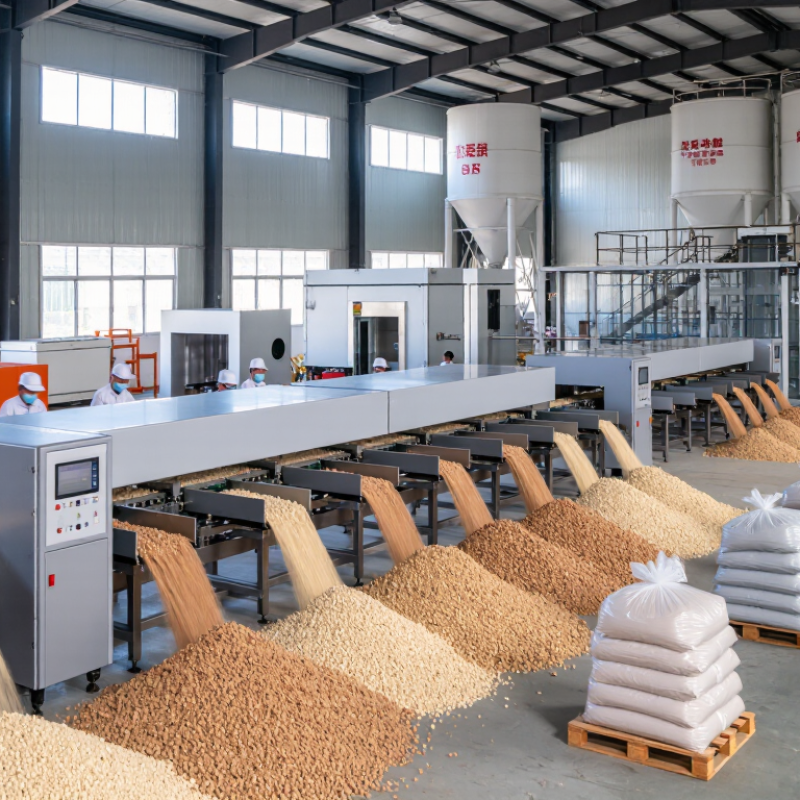
Look closely at the factory floor. Fine particles, sealed bags, moisture testing, and batch records reveal more than attractive packaging. A reliable manufacturer should explain its raw-material sources, production controls, biodegradation evidence, and quality inspection process. Certifications help, but they are not the whole answer. Some suppliers still overstate environmental benefits. That weakness deserves attention.
This guide examines China’s top Biodegradable Cat Litter manufacturers through product quality, manufacturing capability, customization, compliance, and supply-chain reliability. The goal is practical comparison, not easy praise. Sustainability sounds simple. In reality, it requires evidence.
Biodegradable cat litter is made from renewable materials that can break down naturally under suitable conditions. Common options include wood, paper, corn, wheat, tofu residue, and other plant fibers. Unlike traditional clay litter, these materials can reduce dependence on mined minerals. They may also create lighter bags and less dust during daily use. The environmental benefit depends on the material, processing method, packaging, and disposal route.
In practical use, pellets often feel lighter under a scoop and produce less tracking around the litter box. Fine plant-based granules can offer stronger clumping, while wood pellets may absorb moisture without forming firm clumps. Reliable manufacturers should explain the raw materials, additives, moisture content, and production testing. Clear documentation matters more than attractive green claims. Odor control should also be tested in realistic home conditions, not only in a factory sample.
Biodegradable does not mean instantly compostable. Some products need commercial composting facilities, while others break down slowly in ordinary soil. Flushing litter can also create plumbing or hygiene problems, even when the material is plant-based. Check local waste guidance before disposal. I have found that no formula performs perfectly for every cat. Some cats reject unfamiliar textures. That matters. A responsible choice balances environmental goals, dust levels, odor control, disposal conditions, and the cat’s comfort.
China Top Biodegradable Cat Litter Manufacturers
Key Materials Used by Chinese Biodegradable Cat Litter Manufacturers
Chinese biodegradable cat litter manufacturers commonly use tofu residue, pea fiber, corn, cassava, wheat, bamboo, wood, and recycled paper. Tofu-based litter uses soybean residue, which forms light pellets with rapid clumping. Corn and cassava provide starch, improving binding without synthetic clay. Wood fiber adds a dry, resinous scent. However, raw material quality varies. Moisture levels can change dust, odor control, and clump strength.
The global cat litter market was valued at about USD 10.8 billion in 2023, according to Fortune Business Insights. The American Pet Products Association reported 58.8 million U.S. households owned cats in 2023–2024. These figures show strong demand, but they do not prove every “natural” product is compostable. ASTM D6400 applies to industrial compostability, not automatic backyard decomposition. That distinction matters.
Chinese producers increasingly test particle size, absorption, dust release, and microbial safety. Some facilities also trace agricultural waste back to regional suppliers. A practical test is simple: pour pellets into a clean tray and observe clumping after ten minutes. Weak products may soften too quickly. Stronger formulas often balance tofu fiber with starch or wood pulp. Still, biodegradable claims need careful verification. Certification, disposal instructions, and local waste conditions should be checked before purchase.
| Key Material | Typical Plant Source | Common Product Form | Main Functional Properties | Biodegradability Profile | Common Supporting Ingredients | Important Manufacturing Considerations |
|---|---|---|---|---|---|---|
| Tofu Fiber | By-products of soybean processing, including soybean residue and fiber | Granules, cylinders, and mixed-grain pellets | Lightweight, relatively low dust, good liquid absorption, and suitable for clumping formulations | Biodegradable Plant-based fiber can decompose under suitable biological conditions. |
Natural starch binders, activated carbon, plant extracts, and mineral odor absorbers | Moisture control is important during extrusion, drying, storage, and packaging to prevent mold and loss of clumping performance. |
| Pea Fiber | Pea-processing residues and purified pea fiber | Fine granules, pellets, and blended tofu-style litter | Provides plant fiber, improves pellet structure, and can support absorption in blended formulas | Biodegradable Vegetable fiber is generally biodegradable when exposed to appropriate moisture and microorganisms. |
Starch, cellulose fiber, activated carbon, and odor-control minerals | Particle size and fiber length affect pellet strength, dust generation, and liquid uptake speed. |
| Corn Starch | Corn kernels and corn-processing starch | Clumping granules, extruded pellets, and composite formulas | Acts as an absorbent carbohydrate and natural binder; supports firm clump formation | Biodegradable Starch is readily biodegradable under suitable composting or biological conditions. |
Cellulose, zeolite, activated carbon, and plant-based fragrance materials | High humidity can cause premature swelling or pellet deformation, so sealed moisture-resistant packaging is commonly required. |
| Cassava Starch | Cassava roots and tapioca starch | Fine clumping granules and starch-based blended pellets | Strong gelatinization and binding ability; helps create compact clumps after contact with liquid | Biodegradable Derived from a renewable root crop and decomposable through biological activity. |
Wood fiber, corn starch, cellulose, and activated carbon | Processing temperature and moisture must be controlled to balance clump strength with acceptable pellet hardness. |
| Wheat Fiber | Wheat bran, wheat fiber, and grain-processing by-products | Granules, compressed pellets, and mixed cereal-based litter | Provides absorbency and natural fiber structure; may improve granule cohesion | Biodegradable Grain-derived fiber is biodegradable under suitable environmental conditions. |
Starch, cellulose, mineral odor absorbers, and activated carbon | Raw-material cleanliness and allergen communication should be considered; humidity control helps reduce microbial risks. |
| Pine and Other Wood Fiber | Processed softwood or hardwood residues, such as sawdust and wood fiber | Compressed pellets, flakes, and granules | Absorbs liquid, offers a natural wood aroma, and can provide good odor masking | Biodegradable Untreated wood fiber is biodegradable; coatings and additives may affect end-of-life behavior. |
Natural wood lignin, cellulose, activated carbon, and mineral odor absorbers | Wood species, resin content, pellet density, and dust removal affect absorption, tracking, and user acceptance. |
| Bamboo Fiber | Bamboo pulp and bamboo-processing fiber | Granules, pellets, and cellulose-based blends | Renewable cellulose source with lightweight structure and useful liquid absorption | Biodegradable Natural bamboo fiber can biodegrade when not heavily modified with persistent coatings. |
Starch, recycled cellulose, activated carbon, and zeolite | Fiber refinement and drying determine pellet durability, dust level, and absorption rate. |
| Recycled Paper and Cellulose | Recycled paper pulp, virgin cellulose pulp, and paper-processing fiber | Absorbent pellets, soft granules, and non-clumping litter | Lightweight, absorbent, and generally gentle on paws; suitable for low-dust non-clumping products | Biodegradable Cellulose fibers are biodegradable, although inks, coatings, and contamination should be controlled. |
Mineral odor absorbers, baking soda, activated carbon, and plant-based binders | Paper de-inking, fiber cleanliness, pellet compression, and dust screening influence product quality. |
| Activated Carbon | Coconut shell, bamboo, wood, or other carbon-rich biomass | Fine powder or granules blended into plant-fiber litter | Adsorbs odor molecules and helps reduce ammonia-related odor perception | Generally not the primary biodegradable component; its environmental profile depends on the biomass source and processing method. | Tofu fiber, corn starch, cellulose, wood fiber, and zeolite | Uniform dispersion and controlled dosage are needed to avoid excessive dust and maintain consistent odor performance. |
| Zeolite and Other Natural Minerals | Naturally occurring aluminosilicate mineral deposits | Granules or fine blended powder | Helps adsorb moisture and certain odor compounds; improves bulk density and odor control | Not biodegradable Minerals are persistent but may be used in small proportions in plant-based formulations. |
Tofu fiber, corn starch, wood fiber, and activated carbon | Particle size, purity, dust content, and total mineral ratio should be controlled to preserve the product’s lightweight and plant-based positioning. |
In China, biodegradable cat litter usually begins with plant-based materials. Common inputs include tofu residue, corn fiber, bamboo, wood fiber, and recycled paper. Suppliers inspect each shipment for moisture, odor, foreign particles, and material consistency.
Moisture matters.
Too much moisture can weaken clumps and increase storage problems. Experienced factories keep supplier records and retain samples from every batch.
The clean materials are crushed, blended, and shaped into granules. Some production lines use extrusion, while others use mechanical pressing. Controlled drying lowers moisture without burning the plant fibers. Screens then remove oversized pieces and powder. Air separation reduces fine dust before filling.
Workers check granule size by hand and with simple measuring tools. Machines also test absorption, clumping strength, odor performance, and moisture levels.
Packaging is sealed after batch inspection. Labels should identify ingredients, production dates, and storage conditions. Reliable facilities keep production records for traceability.
However, biodegradable does not always mean suitable for every disposal system. Additives, coatings, and local waste facilities can change the result.
No batch is perfectly identical. Seasonal crops may absorb moisture differently, and this can affect texture. Careful factories adjust the recipe, but excessive adjustment may reduce natural content. Buyers should request test reports, ingredient details, and recent samples before placing large orders.
China’s biodegradable cat litter industry includes several manufacturer types. Factory-direct producers usually control raw material processing, granulation, drying, and packaging under one roof. OEM and ODM factories adjust particle size, scent, clumping strength, and bag design for overseas buyers. Some specialized suppliers focus only on plant fibers, such as tofu residue, corn, wheat, bamboo, wood, or recycled paper.
Product categories vary by material and use. Tofu and pea-fiber litter often forms firm clumps and dissolves more easily in water, although disposal requirements should be checked locally. Corn and wheat formulas can feel soft under a cat’s paws.
Wood and bamboo pellets offer lower tracking but may need more frequent replacement. Paper pellets suit sensitive environments, but they may absorb moisture more slowly. Mixed formulas try to balance absorption, odor control, dust level, and price.
Reliable sourcing requires more than reviewing attractive samples. Ask for batch records, moisture results, dust testing, and packaging specifications. A practical trial should measure clump formation after ten minutes, not just visual appearance. Check whether bags remain sealed after transport and storage.
No supplier gets every batch perfect. Weaker testing can miss seasonal changes in agricultural fibers. A careful buyer should compare three production batches, inspect the factory process, and request honest explanations when results vary.
China’s biodegradable cat litter sector deserves careful supplier screening, not only attractive pricing. Grand View Research estimated the global cat litter market at about USD 10.86 billion in 2023, with continued growth expected through 2030. Definitions vary between reports. Treat market forecasts as direction, not proof of product quality.
Request three production samples from different batches. Test clumping time, liquid absorption, dust, tracking, and odor after 24 hours. Measure moisture content before and after sealed storage. A polished sample can mislead. Ask for raw-material specifications, batch records, corrective-action reports, and factory quality procedures. ISO 9001 certification supports process control, while ISO/IEC 17025 laboratory reports provide stronger testing credibility. Verify certificates directly with the issuing organization.
Biodegradability claims need precise evidence. Ask which test method supports the claim, under what conditions, and within what timeframe. Check pesticide residues, heavy metals, microbial safety, and packaging migration where relevant. The supplier should explain corn, tofu, wood, or mineral inputs clearly, including additives and sourcing regions. APPA’s 2023–2024 National Pet Owners Survey reported cat ownership in 39% of U.S. households, showing a large user base with varied expectations. Yet cat preference remains individual. Trial shipments, customer feedback, and independent retesting matter more than brochures. A lower factory price may hide inconsistent granule size or excessive dust. Evaluate landed cost, production capacity, lead time, export experience, and complaint response in one documented scorecard.
Common materials include tofu residue, pea fiber, corn, cassava, wheat, bamboo, wood, and recycled paper. Each material behaves differently.
Tofu residue can form light pellets with rapid clumping. It often combines with starch for firmer clumps. Results may vary.
No. A natural label does not prove compostability. Industrial certification may not apply to backyard composting.
Pour pellets into a clean tray. Add a typical amount of liquid. Check the clump after ten minutes.
Weak litter may soften too quickly or leave scattered crumbs. Excessive dust can appear during pouring. That matters.
Corn and wheat formulas often feel soft under paws. Wood and bamboo pellets may reduce tracking. Paper pellets can suit sensitive environments.
Request moisture results, dust tests, batch records, and packaging specifications. Ask how agricultural fibers are traced. Samples alone are insufficient.
Compare at least three batches under the same conditions. Check clumping, odor control, dust, and bag sealing. Seasonal variation can be missed.
Disposal depends on local rules and wastewater conditions. Check the product instructions before flushing or composting. I would not assume safety.
No formula is perfect. Moisture can change clump strength, dust, and odor control. Careful testing prevents confident but weak decisions.
Biodegradable Cat Litter is an environmentally conscious alternative to conventional mineral-based litter, designed to break down more naturally after use while still providing effective odor control, absorption, and clumping performance. Chinese manufacturers commonly work with renewable materials such as tofu residue, corn, wheat, bamboo, wood fiber, and recycled plant resources. The choice of material affects texture, dust levels, absorbency, odor management, and disposal options.
In China, production usually involves raw-material preparation, drying, grinding, formulation, granulation, screening, quality inspection, and sealed packaging. The market includes large-scale factories, specialized private-label producers, and suppliers focused on specific product categories such as clumping litter, pellet litter, flushable formulas, and low-dust solutions. When selecting a manufacturer, buyers should assess material sourcing, production capacity, testing procedures, customization capabilities, packaging support, consistency between batches, communication, and compliance with applicable product and environmental requirements. A reliable supplier should provide clear specifications and stable quality for the intended market.