Clumping Cat Litter looks simple in the tray, but its chemistry is surprisingly practical. When moisture reaches the litter, bentonite clay absorbs liquid and forms a firm mass. That clump can be lifted without emptying the entire box. The remaining litter stays relatively dry, which helps control odor and reduces daily waste.
Dr. Bruce Elsey, a veterinarian and developer associated with clumping clay litter, has emphasized, “The best litter is the one your cat will use consistently.” That principle matters more than clever packaging. A cat may reject strongly scented litter, rough particles, or a dusty box. Watch the details: paw marks around the tray, digging time, and whether your cat returns comfortably.
This guide will explain what Clumping Cat Litter contains, how absorption and odor control work, and why different formulas behave differently. It will also examine tracking, dust, maintenance, and safe changing habits. Scoop regularly. Keep the box clean.
Still, clumping litter is not perfect. Some products break apart when wet, while others stick to the bottom like damp cement. Claims about “maximum odor control” can also feel broader than the real experience. Room ventilation, box size, and cleaning frequency influence results.
A useful choice balances performance, texture, and your cat’s preferences. Human convenience matters, but the cat gives the final verdict.
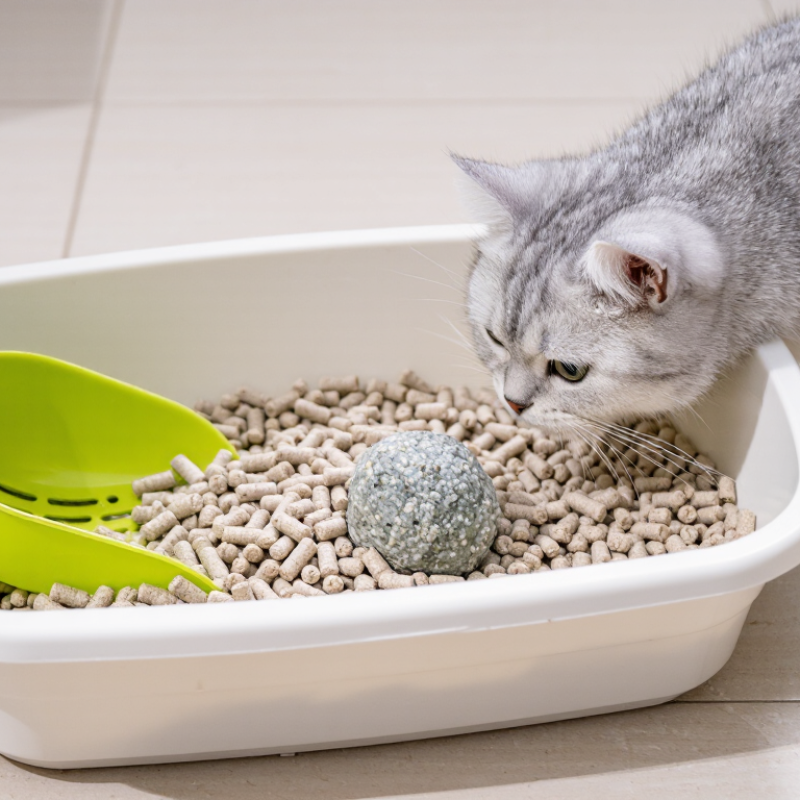
What Is Clumping Cat Litter? Bentonite and Its 15× Absorption Capacity
Clumping cat litter is usually made with bentonite clay, a natural mineral that reacts quickly with moisture. Its tiny particles swell when they contact urine, binding nearby granules into a firm, scoopable mass. This is why the litter tray can stay cleaner than with non-clumping material.
Bentonite is often described as having up to 15 times its weight in absorption capacity. That figure is useful, but it is not universal. Mineral quality, particle size, moisture level, and ventilation can change actual performance. In a fresh tray, liquid tends to move downward before the clay forms a compact clump. I have found that a deeper, even layer usually produces cleaner removal than a shallow one.
The practical benefit is targeted cleaning. Remove the wet clump and nearby soiled granules, while leaving the dry litter in place. This can reduce waste and limit lingering odor, provided the tray is scooped regularly. Still, bentonite can create fine dust, especially when poured quickly. Some cats dislike dusty textures or strong scents. A low-dust formula and gradual litter changes may help, though neither choice works perfectly for every cat. Watch the paws, the breathing, and the tray habits.
How Liquid Triggers Clumping: Granule Swelling in 10–15 Minutes
What Is Clumping Cat Litter and How Does It Work?
Clumping cat litter forms a scoopable mass when liquid reaches its absorbent granules. Many formulas use swelling clay, while others use plant-based materials with similar binding behavior. The exact texture varies.
The process begins when urine moves through the upper layer. Granules absorb the moisture and expand around it. Their surfaces then stick together, creating a firm, localized clump. This usually happens within 10–15 minutes, although depth, humidity, and liquid volume can change the timing. I have found that a fresh clump often feels soft at first. It becomes more stable after several minutes.
Give it time.
Scooping too early may break the mass and leave wet particles behind. Waiting too long can allow moisture to reach the box base, where odors and residue become harder to manage. A practical routine is to check the box after the litter has rested, then lift the clump from underneath with a suitable scoop. Removing solid waste and saturated litter regularly helps preserve the remaining dry granules.
Clumping is not perfectly predictable. A thin layer may absorb quickly, while a deep or compacted layer can behave differently. Some granules also swell unevenly. That is worth remembering when judging performance. Clean, dry litter usually provides clearer results than heavily used litter with old residue.
What Is Clumping Cat Litter and How Does It Work? — How Liquid Triggers Clumping: Granule Swelling in 10–15 Minutes
| Approximate Time After Contact |
What Happens to the Granules |
What You May Observe |
Why It Matters |
| 0–1 minute |
Liquid reaches the litter surface and moves between nearby particles. In common clay-based clumping litter, absorbent bentonite begins taking up moisture. |
The wetted area may darken or look slightly damp; a firm clump may not have formed yet. |
Liquid volume, pour rate, litter depth, and particle contact all affect how quickly moisture spreads. |
| 1–5 minutes |
Clay granules absorb water and swell. Particles in the wet zone begin to adhere to one another. |
A soft, fragile mass may develop around the source of the liquid. |
Swelling and particle-to-particle contact help contain moisture rather than letting it spread through the whole tray. |
| 5–10 minutes |
More of the wetted particles bind together as the liquid is absorbed into the surrounding litter. |
The mass may become more defined, though its center can remain moist and it may break if disturbed. |
Deeper litter and a concentrated wet spot can take longer to form a scoopable clump. |
| 10–15 minutes |
With suitable clumping litter and conditions, the swollen particles may have formed a more cohesive mass. |
A clump may be easier to lift with a scoop, but strength and dryness can vary. |
Allowing time before scooping can reduce breakage. This time range is a practical guide, not a guaranteed setting time. |
| After removal |
The bonded, moisture-containing material is lifted out, while the remaining dry litter stays in the tray. |
Regular removal helps keep the remaining litter cleaner and usable. |
Follow the litter’s package directions and maintain an appropriate litter depth for the product. |
Note: Many clumping litters use bentonite clay, which absorbs liquid and swells; other formulations may behave differently. Clumping speed and firmness vary with the litter composition, liquid amount, temperature, and depth of the litter. The 10–15-minute interval is an approximate observation window, not a universal guarantee.
Why Clumps Stay Firm: Particle Size, Moisture, and Binding Performance
Clumping cat litter turns liquid into a scoopable mass through absorption and binding. Sodium bentonite expands when wet, while capillary action pulls moisture between particles. Particle size matters. Finer grains expose more surface area and absorb urine quickly. However, excessive fines may increase dust and create a sticky base. Larger grains improve airflow but can leave weak edges around the wet center.
Moisture level controls firmness. A small deposit may form a hard, compact clump. Too much liquid can overwhelm the clay before swelling finishes. A balanced particle-size range helps moisture spread evenly. Some plant-based formulas use starch or natural gums for extra binding. Their performance varies with humidity and storage age. No formula is perfect. I would not judge strength from one scoop alone. The real test is a clean break after several minutes.
The American Pet Products Association’s 2023–2024 National Pet Owners Survey reported 46.5 million U.S. cat-owning households. Grand View Research estimated the global cat litter market at about 10.8 billion dollars in 2023. These figures show why consistency matters at household scale, not just in laboratory testing.
Tips: Keep litter depth near 7–8 centimeters, and remove clumps after they firm. Store the container sealed and dry. If clumps crumble, check moisture exposure before changing the entire formula. A simple hand test helps: firm clumps should lift cleanly, without leaving a wet paste underneath.
How Odor Control Works: Ammonia Adsorption and Carbon-Based Additives
Clumping cat litter usually contains absorbent mineral granules that bind with urine. When moisture reaches the granules, they swell and form a firm mass. This makes daily scooping more precise. Less contaminated litter remains in the tray, which can reduce lingering smells.
Ammonia develops when urine breaks down over time. Porous minerals can adsorb ammonia molecules onto their surfaces, limiting how much reaches the air. Some formulas also use carbon-based additives. Activated carbon has many tiny pores that trap odor compounds, especially sulfurous and organic molecules. However, carbon does not remove every odor, and its performance declines when the pores become saturated.
That distinction matters.
A clean box still needs ventilation and regular removal of wet clumps. A deep layer may seem convenient, but excess moisture can collect underneath and weaken odor control. In practice, I would inspect the tray after scooping. A sharp ammonia smell near the bottom suggests that adsorption is no longer keeping pace with urine buildup. It may also signal insufficient cleaning or poor airflow.
Odor control is not magic.
Some litter can hide a smell briefly without eliminating its source. Fragrance may even make changes harder to notice. A more reliable approach is to combine effective clumping, fresh carbon or mineral adsorbents, adequate litter depth, and consistent maintenance. Results can vary with humidity, box size, cat number, and cleaning habits, so product claims deserve careful testing at home.
How Quality Is Measured: Dust, Tracking, Scoopability, and Absorption Rate
Clumping cat litter uses absorbent granules, often clay, that bind with moisture. When urine reaches the granules, they form a firm mass. This allows removal without replacing every clean particle. In practice, quality depends on more than a tight clump. Dust matters during pouring and scooping. A reliable test is simple: shake a measured cup, then inspect airborne powder against dark paper. Less residue usually means better control, though lighting can mislead. Tracking is measured by counting granules carried beyond the box after a set number of uses. Mat placement changes the result.
Scoopability describes how cleanly a clump leaves the tray. I test it after several minutes, then again after a longer wait. The first test reflects routine cleaning; the second exposes weak bonding. A good clump lifts in one piece and leaves little paste behind. Absorption rate is timed from liquid contact until the surface appears dry. Fast absorption can reduce wet paw contact. Not always. Some litter absorbs quickly yet crumbles under a scoop. No test is perfect. Household humidity, litter depth, and a cat’s digging style can alter results. I once judged a low-tracking formula too quickly; a finer texture later spread farther across the floor.
Conclusion
Clumping Cat Litter is typically made with bentonite, a natural clay known for its ability to absorb up to about 15 times its weight in liquid. When moisture reaches the granules, they swell and bind together, usually forming a scoopable clump within 10–15 minutes. This process makes daily cleaning easier because wet material can be removed while the remaining litter stays relatively dry.
The strength and reliability of each clump depend on particle size, moisture distribution, and the litter’s binding performance. Effective odor control may come from bentonite’s ability to help trap ammonia, along with carbon-based additives that absorb unpleasant smells. Quality is evaluated through several practical features, including low dust, minimal tracking, easy scoopability, and a fast, consistent absorption rate. Together, these factors determine how clean, convenient, and effective the litter is for everyday use.
 EN
EN