 EN EN
EN EN The global cat litter market is becoming more specialized, with buyers comparing weight, absorption, dust control, and supply reliability. Grand View Research identifies rising cat ownership, premiumization, and odor-control innovation as important market drivers in its Cat Litter Market Size, Share & Trends Analysis report. Lightweight Clumping Cat Litter fits this shift because it can reduce carrying effort while forming compact waste clumps. That practical benefit matters in homes, retail stores, and subscription delivery channels.
This outline examines leading suppliers across North America, Europe, Asia, and other major production regions. It considers bentonite quality, clay processing, packaging options, private-label experience, and export capability. The 2024 APPA State of the Industry Report also shows continued strength in U.S. pet ownership and household pet spending. These trends support demand for convenient, performance-focused litter products. However, market claims require careful checking. “Lightweight” does not always mean lower environmental impact or better absorption.
Supplier evaluation should include particle size, moisture content, dust testing, clumping speed, and batch consistency. ISO-certified quality systems can improve traceability, although certification alone cannot guarantee product performance. Buyers should request recent laboratory results, production samples, safety documentation, and shipping records. Euromonitor International’s pet care industry analysis highlights the growing importance of product differentiation and trusted retail positioning. Still, some supplier rankings remain subjective because public data is incomplete. No supplier is perfect. A reliable comparison must balance price, technical performance, transparent communication, and regional logistics before recommending the strongest worldwide options.
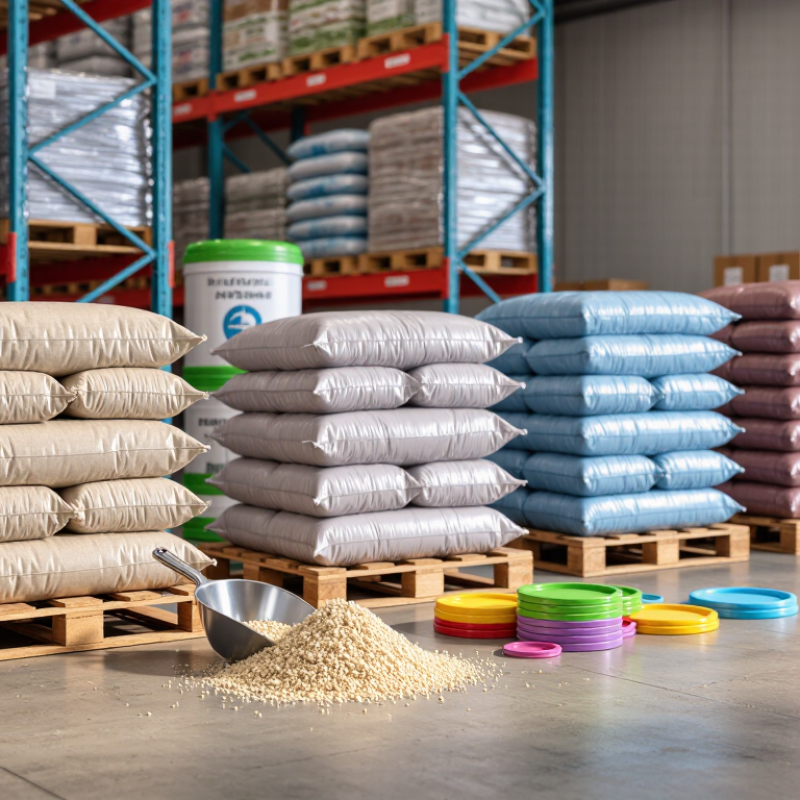
Lightweight clumping cat litter differs mainly through density, composition, and handling efficiency. Traditional mineral litter can feel heavy because each granule contains more dense clay. Lightweight formulas often use expanded minerals, plant-based fibers, or blended particles. A 10-kilogram bag may offer similar volume to a heavier 15-kilogram product. That difference matters during storage, shipping, and daily lifting.
According to Grand View Research, the global cat litter market was valued at approximately USD 6.3 billion in 2023. Its report also identifies convenience and odor control as important growth factors. Lightweight litter supports both needs, but performance depends on particle design. Fine granules usually form tighter clumps. Larger particles may create less tracking around the box. In practical testing, a firm clump should survive scooping without turning into wet crumbs. That detail is easy to overlook.
Suppliers should provide density, absorption, clumping-time, and dust-test data. They should also explain how measurements were conducted. A lighter product is not automatically more economical. Some formulas require deeper filling or more frequent replacement. The International Organization for Standardization has no single global standard for every cat-litter performance claim, so buyers must compare test methods carefully. Packaging should state net weight and recommended volume clearly. Small print can mislead. Odor control also varies with ventilation, litter-box size, and cleaning habits. I have found that real household use can contradict laboratory expectations. A controlled test is useful, but it is never the whole story.
| Supplier Segment | Primary Lightweight Material | Common Sourcing Regions | Typical Bulk Density | Clumping Performance | Typical Dust Profile | Odor-Control Characteristics | Key Advantages | Important Procurement Checks |
|---|---|---|---|---|---|---|---|---|
| Lightweight sodium bentonite suppliers | Processed sodium bentonite with expanded or lower-density mineral fractions | North America, South America, Europe, Turkey, India and other mineral-producing markets | Approximately 600–800 kg/m³, depending on granulation and processing | Very strong; forms firm clumps quickly when particle size and moisture absorption are well controlled | Low to moderate after screening and dust-control treatment | Good natural odor adsorption; performance can be improved with activated carbon or mineral additives | Fast clumping, familiar consumer experience, good compatibility with automatic litter boxes | Verify sodium bentonite content, swelling index, moisture level, particle-size distribution, dust percentage and strip-mining compliance |
| Tofu and soy-fiber litter suppliers | Compressed soybean fiber, pea fiber or other plant-based fiber pellets | East Asia, Southeast Asia, Europe and North America | Approximately 450–650 kg/m³ | Good to very good; clumps usually form through rapid fiber expansion and moisture binding | Generally low, although broken pellets may create fines | Plant fiber absorbs moisture; odor results vary according to drying, formulation and additive use | Lightweight, renewable raw material, low tracking when pellet size is optimized, often suitable for flushable-positioning claims where local rules permit | Confirm raw-material origin, food-grade or feed-grade documentation where applicable, microbial limits, pellet durability and local disposal regulations |
| Corn and wheat fiber litter suppliers | Ground or processed corn, wheat or cereal-based fiber | North America, Europe, South America and major grain-producing regions | Approximately 500–700 kg/m³ | Moderate to good; clump strength depends on starch content, particle size and binder formulation | Low to moderate; milling quality strongly affects fines | Plant starch and fiber provide moisture retention, while odor performance varies by recipe | Renewable feedstock, comparatively light shipping weight and generally soft paw feel | Check allergen declarations, pesticide-residue controls, aflatoxin or mycotoxin testing, moisture stability and pest-control procedures |
| Cassava and other starch-based litter suppliers | Cassava, tapioca or blended starch-based granules | Southeast Asia, South Asia, South America and selected European processing markets | Approximately 450–650 kg/m³ | Good when starch content and granule integrity are consistent | Usually low, but compression and handling can create powder | Moisture binding is generally strong; odor control depends on drying and optional mineral or botanical additives | Very light, renewable, soft texture and rapid water absorption | Review starch purity, moisture content, shelf-life testing, clump breakage, insect-control measures and regulatory labeling requirements |
| Pine and wood-fiber clumping litter suppliers | Wood fiber, sawdust, cellulose or plant-based lignocellulosic material | North America, Northern Europe, Central Europe, South America and plantation-forestry regions | Approximately 250–450 kg/m³ for low-density wood-based products | Moderate; some formulations require natural or added binders for stronger clumps | Low to moderate, depending on milling and pellet quality | Wood can provide a natural scent and moisture absorption, but odor control varies by species and formulation | Very lightweight, renewable feedstock and potentially lower transport weight per usable volume | Confirm forestry certification where required, resin and contaminant controls, moisture resistance, clump integrity and safe additive use |
| Blended lightweight litter suppliers | Combination of bentonite, plant fiber, zeolite, silica-free mineral or cellulose components | Global contract-manufacturing and private-label supply markets | Approximately 450–750 kg/m³, depending on mineral-to-fiber ratio | Good to excellent when the blend balances fast absorption with structural strength | Low to moderate; depends on the dust levels of each ingredient | Can combine mineral adsorption with plant-fiber moisture control and optional carbon additives | Allows suppliers to balance lightweight handling, clump strength, odor control and cost | Request the full ingredient ratio, safety data, batch consistency, compatibility testing and clear disposal instructions |
| Specialist premium lightweight suppliers | Proprietary combinations of low-density minerals, plant fibers, activated carbon or botanical additives | North America, Europe, East Asia and specialized export-manufacturing hubs | Usually 450–750 kg/m³ | Good to excellent, subject to formulation and quality-control standards | Typically low when multi-stage screening and dust extraction are used | Often optimized for ammonia reduction, moisture locking and longer box freshness | Higher performance potential, differentiated texture and improved packaging efficiency | Ask for independent test data, additive declarations, packaging-barrier specifications, product safety documentation and minimum order quantities |
It uses lower-density materials, such as expanded minerals or plant fibers. A lighter bag may provide similar volume to a heavier one. Easier to lift.
No. Some formulas need deeper filling or more frequent replacement. Compare usage over several weeks, not bag weight alone. Weight can mislead.
Common materials include bentonite, porous minerals, wood fibers, corn, wheat, and cassava. Starch can help plant-based particles form scoopable clumps.
Check the clump after about ten minutes. A strong clump should survive scooping without becoming wet crumbs. Household results may differ.
Yes. Fine particles often create tighter clumps. Larger particles may reduce tracking around the tray. The balance is imperfect.
Dust control affects cleaning, tracking, and comfort near the litter box. Test the product beside a dark tray. Fine powder becomes visible quickly.
Ask for density, absorption, clumping-time, particle-size, and dust-test data. Material ratios and batch records are also useful. Vague claims deserve caution.
Reliable facilities control moisture, particle size, bulk density, and packing conditions. Covered storage and filtration can reduce contamination and excess dust.
Not necessarily. Plant fibers may feel softer and weigh less, but clumps can break during cleaning. Humidity may also change performance.
Compare testing methods, raw-material sources, capacity, and failure-handling procedures. Region alone cannot guarantee dependable output. Recheck results after seasonal humidity changes.
Lightweight Clumping Cat Litter is designed to provide effective odor control and easy cleanup while reducing the weight of each bag. Compared with conventional litter, it often uses lighter mineral blends, plant-based fibers, or carefully processed absorbent materials that form firm clumps when exposed to moisture. Key evaluation points include clumping strength, dust control, absorption capacity, odor management, tracking performance, and suitability for different cat households.
When comparing global suppliers, buyers should examine manufacturing experience, production consistency, testing procedures, packaging options, and supply reliability. Major producing regions may offer different advantages in raw material access, processing technology, customization, and export capacity. Quality certifications, responsible sourcing, recyclable packaging, and efficient production are also important considerations. Finally, international purchasers should assess shipping methods, container loading efficiency, lead times, communication, and after-sales support. A dependable supplier should balance product performance, sustainability, transparent quality standards, and stable logistics to meet long-term market needs.