
0%

European Lightweight Cat Litter is gaining attention from buyers who need manageable shipping weights, convenient storage, and reliable performance in the litter tray. Europe has a substantial cat-owning population: FEDIAF’s European Pet Population and Food Industry report estimates more than 100 million cats across the region. That scale makes supplier choice consequential. Yet “lightweight” alone tells buyers very little.

Material, dust control, absorbency, odour management, packaging, and cat acceptance all deserve scrutiny. A bag that feels easy to lift can still disappoint if it scatters across the floor or needs frequent replacement. Small details matter: the carry handle, seal quality, and whether the product arrives intact after a long delivery route. Buyers should also compare technical specifications and request samples before committing to large orders. A catalogue claim is not a performance test.

This guide profiles seven European suppliers and highlights practical points for comparison, including product formats, sourcing information, and suitability for different purchasing needs. Feline behavior expert Dr. Sarah Ellis is a relevant authority on cat welfare, but no verifiable public quotation from her specifically about lightweight litter is available here. Rather than invent a quote, buyers should treat feline acceptance as a factor to test with their own customers and products. There is no universal winner. Even useful comparisons have limits.
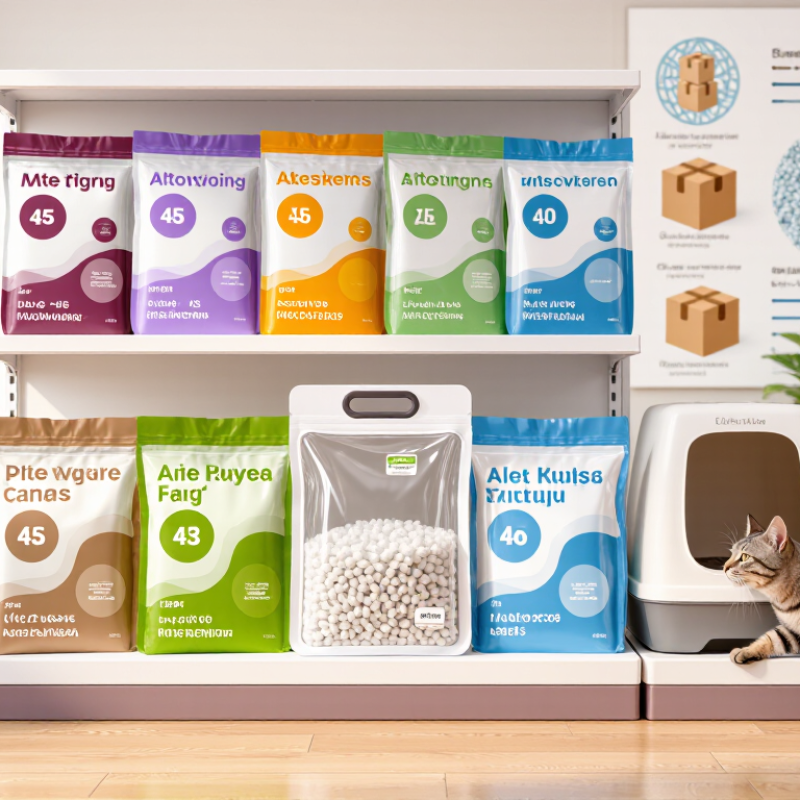
7 Best European Lightweight Cat Litter Suppliers for Buyers

What Makes a Lightweight Cat Litter Supplier Suitable for European Buyers?

European buyers should assess a lightweight cat litter supplier by more than bag weight. A useful product pairs easier handling with dependable absorption, controlled dust, and consistent granule size. Ask for test methods and batch specifications, not just marketing claims. Lightweight is not automatically better.

FEDIAF’s 2024 European Pet Population and Pet Ownership Report estimates that Europe has about 129 million cats. That figure signals a large, varied market, not one universal litter preference. Buyers should request samples and test them in the trays their customers actually use. Check how quickly the litter absorbs liquid, whether clumps hold during scooping, and how much dust appears when pouring. Small differences matter in a flat, a shop storeroom, or a delivery van.

Supplier suitability also depends on clear shipment data: net weight, pallet configuration, lead times, and batch-to-batch tolerances. Request safety and quality documentation, plus packaging specifications that make handling practical. A low-density product may reduce lifting effort but require more shelf or transport space. That trade-off is easy to overlook. No supplier can promise identical performance in every home, so verify claims with repeat tests and keep records of results.

Which Materials and Product Features Should Buyers Compare?

When comparing European lightweight cat litter suppliers, start with the material, not the “lightweight” label. Paper, wood, and other plant-based fibers can weigh less than many mineral litters, but their texture and absorbency differ. Ask for the material’s origin, processing method, and a current product specification sheet. A sample bag helps reveal details that a catalog cannot: loose dust on the paws, pellet size, and how quickly wet litter breaks down.

Check performance under everyday conditions. Does the litter form a firm clump, or does it leave damp crumbs stuck to the tray? How much is needed per fill, and how often must it be replaced? Odor control can depend on ventilation, cleaning habits, and the number of cats, so broad claims deserve careful testing. Low dust matters, especially when pouring from shoulder height. Still, “low dust” is not the same as dust-free. Ask whether fragrance is added and whether the supplier provides handling and disposal guidance for the product.

Compare packaging weight, bag strength, and moisture protection too. A light product may reduce lifting effort, yet a thin bag can split during delivery. Request batch-level quality information and clarify how specifications are checked. A tidy data sheet can still miss the awkward part: different cats may reject the same texture, and performance may shift in a humid room. Small trial packs make that uncertainty easier to manage.

European Lightweight Cat Litter: Materials and Features to Compare

The chart compares common material categories, not individual products. “Yes” means the format is commonly available; it does not guarantee that every supplier offers it. Buyers should also compare actual bag weight, dust levels, absorption, clump strength, and disposal guidance on each product specification sheet.

Seven European Suppliers of Lightweight Cat Litter

European buyers can build a useful shortlist by comparing suppliers with different lightweight materials: expanded mineral blends, wood fiber, recycled paper, corn-based litter, straw fiber, pea-based litter, and mixed plant-fiber formulas. Each option behaves differently in the tray. Wood pellets may feel firm underfoot, while paper granules are often softer and less dusty. Plant-based products can vary in particle size and clumping strength.

Ask each supplier for a current product specification, sample, and clear information about composition, moisture, dust control, and packaging weight. A small home test can reveal details that a brochure misses: how quickly litter absorbs liquid, whether it sticks to paws, and how much ends up around the mat. Check whether the supplier can maintain consistent batches and meet your delivery schedule. Lightweight bags are easier to handle, but low weight alone does not prove good value.

European suppliers may offer private-label production, bulk shipments, or smaller trial orders. Compare minimum order quantities, lead times, and the protection used for pallets in transit. Request measurements under the same test conditions; otherwise, performance claims are hard to compare. I would not choose on price alone. Even so, no sample perfectly represents months of use, and that limitation deserves attention.

7 Best European Lightweight Cat Litter Suppliers for Buyers — Seven European Suppliers of Lightweight Cat Litter
European Sourcing Region Supplier Profile Lightweight Litter Options Relative Weight Buyer Checks
Germany Wood-fiber litter supplier Loose wood fibers or compressed wood pellets, typically made from processed wood material. Generally lighter than mineral clay litter; actual weight depends on moisture and pellet density. Request bulk density, moisture limits, dust specifications, and confirmation of the wood source.
France Recycled-paper litter supplier Absorbent paper granules or pellets made from processed paper fiber. Usually lightweight compared with bentonite or other mineral litters. Check recycled-fiber content, pellet durability, dust level, and disposal guidance.
Spain Mineral-litter supplier Sepiolite-based granules; some suppliers may also offer other mineral litter types. Mineral litter is generally heavier than wood- or paper-based options. Verify mineral composition, granule size, dust-control process, and delivered weight per bag.
Italy Clumping mineral-litter supplier Bentonite-based granules, commonly sold as clumping litter. Typically heavier than plant-fiber and paper litter; compare shipping cost by usable volume. Ask for bentonite type, clumping test method, dust specifications, and absorbency data.
Poland Wood-based litter supplier Wood pellets or other processed wood-fiber formats. Generally lightweight relative to mineral clay, though pellet density varies by product. Confirm raw-material origin, pellet dimensions, moisture content, and packaging options.
Netherlands Paper-fiber litter sourcing profile Recycled-paper or cellulose-based granules and pellets. Usually among the lighter litter categories; compare weight per litre rather than bag weight alone. Clarify whether the supplier manufactures or distributes the product, and verify country of origin.
Austria Plant-fiber and wood litter supplier Wood-based pellets or plant-fiber granules, depending on the supplier’s product range. Often lighter than mineral litter; density and absorbency differ between materials. Request product-specific density, ingredient details, safety documentation, and sample bags.

Buyer note: These are anonymous sourcing profiles based on common litter-material categories, not named or ranked companies. Product availability, manufacturing location, weights, and performance vary by supplier; confirm specifications and country of origin directly before placing an order.

How Do the Suppliers Differ in Pricing, Packaging, and Distribution?

European lightweight cat litter suppliers often differ less in product claims than in their commercial terms. Some quote lower prices for full-pallet orders, while others accept smaller trial volumes at a higher unit cost. Ask whether prices include delivery, pallet handling, and export packaging. A low quote can change quickly. Check the cost per usable litre, not just the price per bag.

Packaging affects storage and shelf appeal. Suppliers may offer compact paper sacks, resealable bags, or larger bulk formats. A 6-litre bag is easier for many shoppers to carry, but it may raise packaging costs per litre. Request samples and inspect the seams, carrying handle, and dust after pouring. Small details matter. I would not judge a bag from photographs alone.

Distribution can separate a convenient supplier from a costly one. Some ship from a single warehouse; others use regional stock points that may shorten delivery times. Ask for typical lead times, minimum order quantities, and how delays are communicated. Compare delivery estimates against your own seasonal demand. A supplier’s stated schedule is useful, but it is not a guarantee. One practical approach is to test a modest order before committing to regular shipments, then record arrival condition and actual delivery time.

What Should Buyers Check Before Placing an Order?

Before ordering, request a sample from the same production batch intended for shipment. Test it in a real tray, not just in a cup. Check how quickly it absorbs liquid, whether clumps hold when lifted, and how much dust appears while pouring. A lightweight product may reduce shipping weight, but compare bag volume too; bulky packaging can erase some savings. Small details matter.

Ask for written specifications, including material composition, particle size, moisture level, package weight, and acceptable batch variation. Confirm the minimum order quantity, production lead time, pallet dimensions, and whether the supplier can provide recent quality-control records. If a specification is unclear, ask for a measurable answer. “Low dust” is less useful than a defined test method or threshold.

Check packaging seals and storage guidance, especially if the litter may sit in a humid warehouse. Request photos of the finished bags and confirm that labels match the agreed product details. A supplier sheet can look tidy; the litter in a real tray may tell a less tidy story. I would not rely on one sample alone. Repeat the test, and keep notes on odor, tracking, and clump strength.

FAQS

What should European buyers look for in a lightweight cat litter supplier?

Check absorption, dust, granule consistency, and handling. Ask for test methods and batch specifications. Lightweight alone is not enough.

Which materials should buyers compare?

Compare paper, wood, and other plant-based fibers. Ask about material origin and processing. Feel the granules in a sample bag.

How can buyers test litter performance?

Use a real tray. Check absorption speed, clump strength, and dust while pouring. Small differences matter.

Does lightweight litter always reduce shipping costs?

Not necessarily. A lighter product may take up more space. Compare bag volume, pallet dimensions, and shipment weight.

What product details should appear in written specifications?

Request material composition, particle size, moisture level, package weight, and acceptable batch variation. Ask how each detail is checked.

How should buyers assess dust and odor claims?

Ask for a defined dust test method. “Low dust” does not mean dust-free. Odor results can vary with cleaning and ventilation.

What packaging details are worth checking?

Check bag strength, seals, and moisture protection. A thin bag may split during delivery. Confirm storage guidance too.

Is one sample enough before ordering?

I would not rely on one test. Repeat it and record odor, tracking, and clump strength. Cats may reject a texture.

Conclusion

This guide helps buyers evaluate European Lightweight Cat Litter suppliers based on the needs of their markets and distribution channels. It explains why dependable supply, consistent product quality, clear communication, and familiarity with European buyer requirements matter when selecting a partner. Buyers can compare lightweight litter materials and features such as absorbency, odor control, dust levels, texture, and ease of handling, while considering how each option may suit different customers and pets.

The guide also outlines ways suppliers can differ in pricing, package sizes, private-label options, and delivery coverage. Before placing an order, buyers should confirm product specifications, sample quality, minimum order quantities, lead times, packaging details, and the terms of shipping and payment. Comparing these points systematically can help buyers identify a supplier whose products, service, and distribution arrangements fit their purchasing goals.

Olivia

Olivia

Olivia is a marketing professional with a strong understanding of the company’s products, customer needs, and the practical considerations that shape purchasing decisions. She regularly contributes expert articles to the company website, sharing clear, useful guidance on product features,......