Choosing the best Absorbent Cat Litter for wholesale buyers takes more than comparing price per bag. Retailers and distributors need products that perform consistently, arrive in sound packaging, and suit the needs of local customers. A litter may absorb quickly in a small trial yet behave differently in a busy home. That difference deserves attention.
Compare absorption, clump strength, odor control, dust, and ease of disposal using the same simple test conditions. Note how much liquid each sample holds, whether clumps stay intact when scooped, and how much residue remains on the tray. Small details matter. Ask suppliers for product specifications, sample quantities, packaging options, and clear reorder terms. Then check whether the stated product details match what you observe. One test is not proof. Repeat it with fresh samples when possible.
Wholesale decisions also involve freight costs, storage space, bag durability, and predictable supply. A lower unit price can lose its appeal if bags split or customers report inconsistent results. This guide compares common litter types and practical buying factors, including mineral, plant-based, and recycled-material options where available. No product suits every store. Customer preferences, climate, and price range can change the result. A spreadsheet helps, but it cannot capture every customer complaint. Treat product claims as starting points, not guarantees, and review samples before placing a large order.
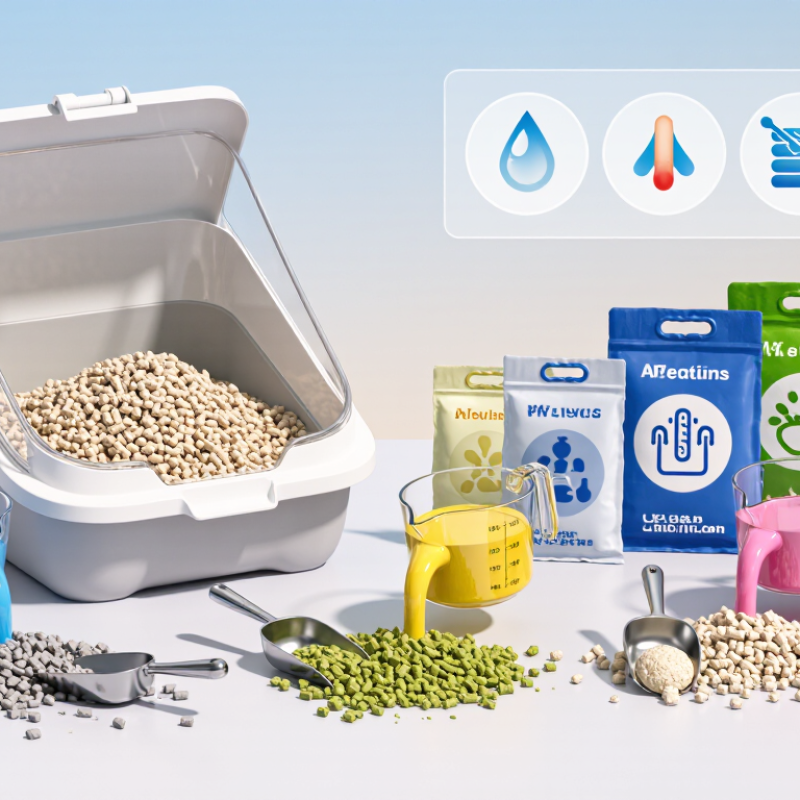
What Absorbent Cat Litter Is and How It Works
Absorbent cat litter is a granular material designed to take up liquid and help contain odor. Its performance depends on pore structure, particle size, and the way granules behave when wet. Sodium bentonite swells as it absorbs moisture, binding particles into a scoopable clump. Silica gel traps moisture in its porous structure, while plant-based fibers draw liquid through tiny channels. Different mechanisms, different cleanup.
The U.S. Geological Survey’s Mineral Commodity Summaries 2025 estimates U.S. bentonite production at about 4.7 million metric tons in 2024. Bentonite also serves industries beyond pet care, so this figure indicates mineral supply, not litter-grade volume. For wholesale buyers, a useful comparison is liquid retained per gram, alongside clump strength, dust, and odor control. A high absorption claim alone says little about everyday performance.
Real trays are less tidy than lab tests. A thin layer may saturate quickly, and uneven granules can leave wet spots at the bottom. The American Pet Products Association’s 2025–2026 National Pet Owners Survey reports about 49 million U.S. cat-owning households. That broad demand makes consistency important, but specifications still need practical checks: pour water onto a measured sample, wait, then inspect the base and scoop. Not glamorous. Necessary.
Main Litter Materials and Their Absorption Properties
Bentonite, silica, and plant-based fibers behave differently once liquid reaches the litter. Sodium bentonite forms clumps as its clay particles swell, helping keep much of the wet material together. ASTM D5890 measures bentonite’s swell index by placing 2 grams in water and recording the expanded volume in milliliters. Useful data, but it is not a direct measure of urine uptake or clump strength. Wholesale buyers should request finished-product tests, including absorption per gram, clump integrity, and dust levels. Small details matter.
Silica gel captures moisture in its porous structure rather than forming clay-like clumps. Its performance depends on pore structure and ambient humidity, so figures from dry-room tests may not predict results in a damp warehouse or a busy litter tray. Plant-based litters, such as wood or paper, vary with fiber size, processing, and starting moisture. ISO 17225-2 classifies wood pellets with an M10 moisture category, meaning moisture content is limited to 10 percent by mass; that figure describes the product’s initial condition, not its absorption capacity. A point worth questioning. Compare candidate materials under one consistent test: add a measured liquid volume, record uptake and drainage, then assess the used litter after a fixed interval. Data sheets rarely capture every household condition.
2026 Best Absorbent Cat Litter for Wholesale Buyers? — Main Litter Materials and Their Absorption Properties
| Main material |
How it handles liquid |
Clumping behavior |
Typical strengths |
Wholesale considerations |
| Sodium bentonite clay |
Swells on contact with moisture and forms a cohesive mass, concentrating liquid in clumps. |
Usually strong and scoopable; performance depends on particle size and formulation. |
Reliable clump removal and familiar handling for many cat owners. |
Generally heavier to ship than many plant-based options; dust level and granule consistency are useful quality checks. |
| Silica gel (amorphous silica) |
Porous beads or crystals take up and retain liquid within their pore structure; moisture also evaporates from the litter surface over time. |
Usually non-clumping; solid waste is removed separately and the litter is stirred as directed. |
Lightweight relative to many mineral litters and often offers good moisture and odor control when maintained properly. |
Crystal size, breakage, tracking, and clear replacement instructions can affect buyer satisfaction. |
| Wood pellets or wood fiber |
Wood fibers absorb moisture; compressed pellets commonly soften and break down into sawdust as they become wet. |
Usually non-clumping; some products use a sifting tray to separate wet material. |
Plant-derived material and relatively large pellets can reduce tracking for some households. |
Pellet durability, moisture protection in packaging, and odor consistency between batches matter. |
| Recycled paper |
Paper fibers absorb liquid into the material; many products are designed to remain non-clumping. |
Typically non-clumping, with wet litter removed during regular tray cleaning. |
Soft, lightweight paper formats are available and can suit cats or households seeking a non-clay option. |
Particle shape, moisture retention, and odor-control expectations should be assessed for the intended market. |
| Plant-based granules (such as soy or corn) |
Absorbent plant fibers or starch-based ingredients take up moisture; performance varies by recipe and granule structure. |
Many formulations are designed to clump, though clump firmness differs across products. |
Renewable feedstocks and lighter handling are common selling points; some products are marketed as flushable, subject to local rules and plumbing guidance. |
Check ingredient disclosure, moisture protection, clump strength, and local disposal requirements before making claims. |
Note: Absorption and odor-control performance vary with particle size, formulation, tray depth, usage, and maintenance. Compare samples using the same test conditions, and follow product labels and local disposal guidance.
How to Compare Absorbency, Odor Control, and Dust Levels
Wholesale buyers should compare absorbency with a repeatable sample test, not a quick squeeze. Weigh the same amount of litter for each sample, then add an equal volume of water in small pours. Note how quickly liquid disappears and whether the base feels wet after five minutes. Small differences matter. A fast-clumping product may still leave damp granules underneath, so check more than the surface.
Odor control needs a practical, consistent check. Use identical covered containers and the same amount of litter and simulated waste, then record odor at set intervals. Human judgment varies, though; one tester’s “mild” may be another’s “strong.” Keep notes from several reviewers, and avoid treating fragrance as proof of odor control. A heavily scented sample can mask smells during a brief test but perform differently in daily use.
For dust, pour each sample from the same height into a dark tray and inspect the settled particles under bright light. Dust tells a story. Compare bags from more than one production batch, since handling and transport can affect results. Ask suppliers for particle-size details and dust-control test methods, then verify samples yourself. No test is perfect; warehouse conditions and pouring habits can skew results, so record them alongside your observations.
Wholesale Factors: Pricing, Packaging, and Supply Reliability
Wholesale buyers should compare absorbent cat litter by usable cost, not just price per ton. A low quote can lose its appeal when bags arrive damaged or litter creates excess waste. Request samples from several production lots. Test how quickly they absorb a measured amount of liquid, and check dust, odor, and consistency. Small differences show up fast in a busy store.
Packaging matters. A 10-liter bag may suit apartment shoppers, while larger sacks can work for multi-cat households. Check the bag’s seal, carrying handle, label space, and resistance to damp storage. Then confirm how many units fit on a pallet and whether the pallet can be stacked safely. One detail is easy to miss: awkward case dimensions can raise freight costs even when the product price looks attractive.
Supply reliability deserves equal attention. Ask for typical lead times, minimum order quantities, and notice periods for production changes. Request clear specifications and inspection records, then compare deliveries against them. A supplier’s confident promise is not a delivery schedule. Build a modest buffer for seasonal demand, but avoid tying up cash in excess stock. I would still review the forecast often; even careful estimates can be wrong. Reliable replenishment usually beats a bargain that arrives late.
2026 Best Absorbent Cat Litter for Wholesale Buyers?
Packaging comparison: bag count per metric tonne
Counts are calculated from package weight and 1 metric tonne = 1,000 kg: 5 kg bags yield 200 bags, 10 kg bags yield 100, and 20 kg bags yield 50. Compare supplier quotes on a per-kilogram landed-cost basis, and confirm pallet configuration, lead times, and order-fill performance before purchasing. These calculations are packaging scenarios, not market-price or supplier-reliability claims.
Matching Litter Types to Retail Markets and Buyer Needs
Wholesale assortments work best when they reflect local shopping habits, shelf space, and freight costs. Grand View Research valued the global cat litter market at about US$5.43 billion in 2023 and projected 4.6% annual growth from 2024 to 2030. That growth does not mean every litter type suits every store. Clumping clay can serve price-conscious households seeking familiar, easy-to-scoop products, but its weight may raise delivery costs. In compact urban shops, smaller bags can be easier to stock and carry home. Small details matter.
Retailers serving shoppers who prioritize lighter bags may test silica, paper, or plant-based litters alongside clay. These options can differ in dust, odor control, texture, and disposal instructions, so samples and clear shelf labels help buyers compare. The American Pet Products Association’s 2025–2026 National Pet Owners Survey reports about 49 million U.S. households own cats, signaling a broad retail base, not one uniform preference. Not every trend travels. Track repeat orders, returns, and customer comments by package size and litter type before expanding a line. Wholesale buyers should also compare absorbency claims against product specifications; a cheaper case may disappoint if shoppers use more litter per change. Some of this judgment is imperfect. Local trials often reveal what national reports cannot.
Conclusion
Choosing the best Absorbent Cat Litter for wholesale buyers in 2026 starts with understanding how different materials take in and retain moisture. Clay, silica, wood, paper, and plant-based litters each offer distinct absorption, clumping, odor-control, and dust characteristics. Comparing these qualities side by side helps buyers assess product performance and identify options suited to different household preferences.
Wholesale decisions also depend on more than absorbency. Unit pricing, package sizes, storage needs, dependable supply, and consistent product quality all affect purchasing value. Retailers can match litter types to their customers by considering factors such as ease of handling, preferred materials, odor management, and budget. A balanced evaluation of performance and sourcing can help wholesale buyers build a practical assortment that serves varied market needs.
 EN
EN